The BPC-157 and TB-500 recovery stack
Recover from nagging injuries and get back to training pain-free. We help you settle the tendon, joint or ligament that keeps flaring, with a plan you can measure.
Is a consultation right for you?
A few short questions, about 60 seconds, and an honest answer at the end.
Your answers stay in this browser and are never sent. If you're a fit, you go straight to your own results page.
Watch first, 60 seconds
Why so many men feel flat, and what doing it properly looks like
Dr. Adam Dombrowski on testosterone, recovery and why every plan starts with your numbers.
Check if you qualifyGet your answerThe short answer
Then the detail, below.
The short answer
The BPC-157 and TB-500 recovery stack, often called the Wolverine stack, may support tendon, ligament and joint healing, calmer inflammation and better flexibility, with BPC-157 also helping with gut repair. At Revita you book a 15-minute consultation, get tested, then your practitioner and Dr. Scott Willis, MD review your numbers and build a plan with a set length and a review point.
Updated 9 November 2026. Reviewed under Dr. Scott Willis, MD.
- Florida-licensed practitionersTreatment only after a consultation
- Licensed pharmacySingle ingredient, traceable source
- Labs near youA blood draw close to home
- Telehealth statewideVideo consultations anywhere in Florida
01
“It feels fine until I train, then it flares again”
A shoulder that pinches on every press. An Achilles that's stiff every morning. A knee that's been "almost better" for a year. You rest it, it calms down, you go back to training, and it's right back where it started.
The recovery stack pairs two peptides that work on different parts of that cycle:
- BPC-157 helps with tendon, ligament and joint healing, and with gut repair. More on it in BPC-157 in Florida.
- TB-500 helps with tissue repair, flexibility and inflammation. See TB-500 in Florida.
Together they're known as the Wolverine stack. Used together, the stack may support your body's own repair so your rehab finally sticks and you train without that familiar warning sign.
It suits people who are already doing the work: lifters, runners, golfers, tennis and pickleball players, and anyone whose job or training puts the same joint under load every week. If you've done the physio, cut back the volume and still can't get past the same sticking point, this is the conversation to have.
02
What we test first, and why
A nagging injury is rarely only about the injury. How well you heal depends on inflammation, sleep, nutrition and hormones, so we look at those before anything starts. Your baseline panel, drawn at a lab near you, typically covers:
- Inflammation: hs-CRP, a marker of background inflammation.
- Blood count, liver and kidney function: a safety check before any medication.
- Vitamin D and ferritin: both are commonly low and both matter for tissue and muscle.
- Blood sugar: fasting glucose and HbA1c, since high levels slow healing.
- Hormones: testosterone in men and the relevant hormones in women, because they help you build and keep muscle.
Bring what you already have: scan reports, your physio's notes, the movements that hurt. That history shapes the plan as much as the bloodwork.
Why bother testing for a sore tendon? Because a low vitamin D, a high blood sugar or low testosterone can quietly slow repair, and fixing that may matter as much as any peptide. It also gives you a baseline, so the review point compares real numbers instead of how you remember feeling.
03
How your plan works and how it's measured
Your plan is written before you begin. It names the injury, the measures and the date you'll judge it.
- Two separate medications. The October 2026 policy covers single-ingredient compounding only, so a licensed pharmacy makes BPC-157 and TB-500 separately. Each has its own dose, and either can be adjusted or stopped on its own.
- The right form. BPC-157 can be an injection under the skin or into muscle, oral or topical. TB-500 is injection only.
- Clear measures. A pain score on one movement that hurts today, range of motion, and the training load you can handle.
- A set length and a review point. At the review you continue, adjust or stop, and repeat labs show how inflammation and other markers moved.
The stack supports your rehab. It doesn't replace it. Your strength work and load management keep going, and the plan works alongside them.
04
Who this isn't for
This stack isn't offered if you're pregnant or breastfeeding, or if you have active or recent cancer.
It's also not the first step for an injury that needs imaging or a surgeon. A suspected full tear, a possible fracture, a joint that locks or gives way, or numbness and weakness should be checked in person first.
And it isn't for anyone hoping to skip rehab. If the plan is "inject and keep doing what hurt me", the injury usually wins.
05
What others aren't doing
Search "Wolverine stack" and you'll find pre-mixed vials, shipped with no questions asked. Here's what that route leaves out:
- Blends in one vial. Two peptides in one product can't be dosed or stopped separately, and the October policy excludes them from licensed compounding.
- "Research use only" labels. These products aren't made for people.
- No baseline, no review. Without numbers before and after, nobody can tell you whether it worked.
At Revita every plan is physician-guided. Your peptides come from a state-licensed pharmacy, single ingredient only, and Dr. Scott Willis, MD, our Florida-licensed medical director, signs off every plan. For the wider picture, read peptides for injury recovery or compare the two in BPC-157 vs TB-500.
06
Your next step
Book a 15-minute consultation about the injury and your training goals. Then you get tested. Then your practitioner reviews your numbers with Dr. Willis overseeing the plan. Then you get your results and a written plan, or an honest answer that something else should come first.
Not sure where to start? Take the 60-second check.

The person behind it
Built by a practitioner, guided by your biology
Dr. Adam Dombrowski, ND
Founder
With over twelve years as a natural practitioner, Dr. Dombrowski founded one of Florida’s leading all-natural practices, helping people across the state get to the root of real health problems. Revita takes that same root-cause thinking and pairs it with peptides and hormone therapy: every plan built from your own biomarkers, with the follow-up to keep it right.
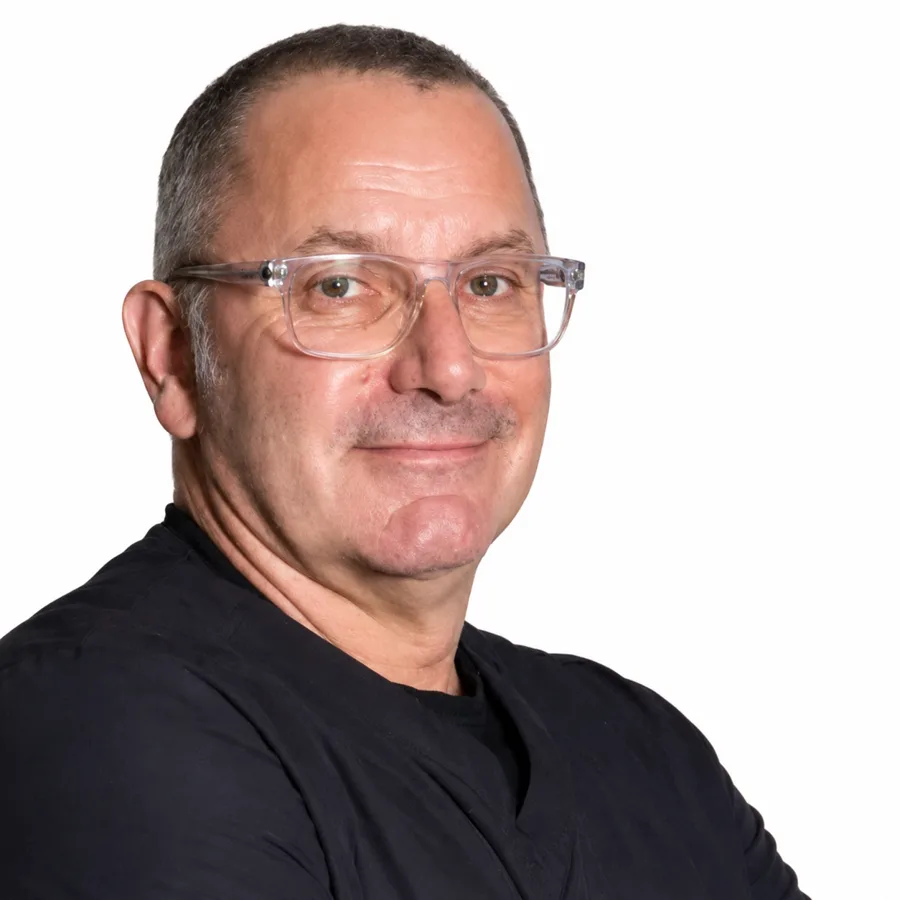
Dr. Scott Willis, MD
Medical director · Board-certified emergency medicine physician
“Saving lives by night. Improving lives by day.”
A board-certified emergency medicine physician with more than 25 years of experience. In the ER his work is about saving lives in critical moments; at Revita it’s about helping clients improve their health for the years ahead. Dr. Willis provides physician oversight, working alongside our naturopathic doctors to bridge conventional medicine with functional and preventive care, and signs off every plan before anything starts.
Keep reading
Make the 15 minutes count
- Your goal in one sentence, and how you'd know it's working.
- Any recent blood work (photos are fine).
- Medications and supplements you take now.
- Injuries or conditions, and what you've already tried.
- Whether you compete in a tested sport.
- Plans for children in the next year or two (it changes the options for hormone therapy).
Not sure yet? A few questions, about a minute, and an honest answer on whether a consultation makes sense.
Check if you qualifyGet your answerSources and further reading
Primary sources, so you can check what we say.
- FDA: Human drug compoundingHow licensed compounding pharmacies are regulated
- Federal RegisterWhere the 30 October 2026 HHS policy was published
- Florida Department of Health: license lookupCheck any Florida practitioner's license
- WADA prohibited listIf you compete in a tested sport
More questions people ask
Still unsure? Take the 60-second check or book a 15-minute consultation.
Why is it called the Wolverine stack?
It's a nickname for using BPC-157 and TB-500 together for repair, after the comic book character who heals fast. The name is marketing; your plan is built on your own labs.
Can I use BPC-157 on its own?
Yes. For some goals, such as gut repair or a single tendon, your practitioner may suggest one peptide rather than both.
Do I have to inject?
TB-500 is injection only. BPC-157 can be an injection, oral or topical, and your practitioner recommends the form that fits your goal.
Can I keep training during the plan?
Usually, yes, with load managed around the injury. Your plan sets which movements to keep, which to scale back and how to progress.
How will I know if it's working?
You track one painful movement, range of motion and training load from the start. At the review point those measures decide whether you continue, adjust or stop.
Are BPC-157 and TB-500 available in Florida?
Both are among the peptides state-licensed pharmacies may compound under the October 2026 policy, single ingredient only. Your practitioner confirms what's available for you.
How much does the stack cost?
It depends on the forms, doses, how long your plan runs and the labs used to measure it. You get the exact figure on your 15-minute consultation.